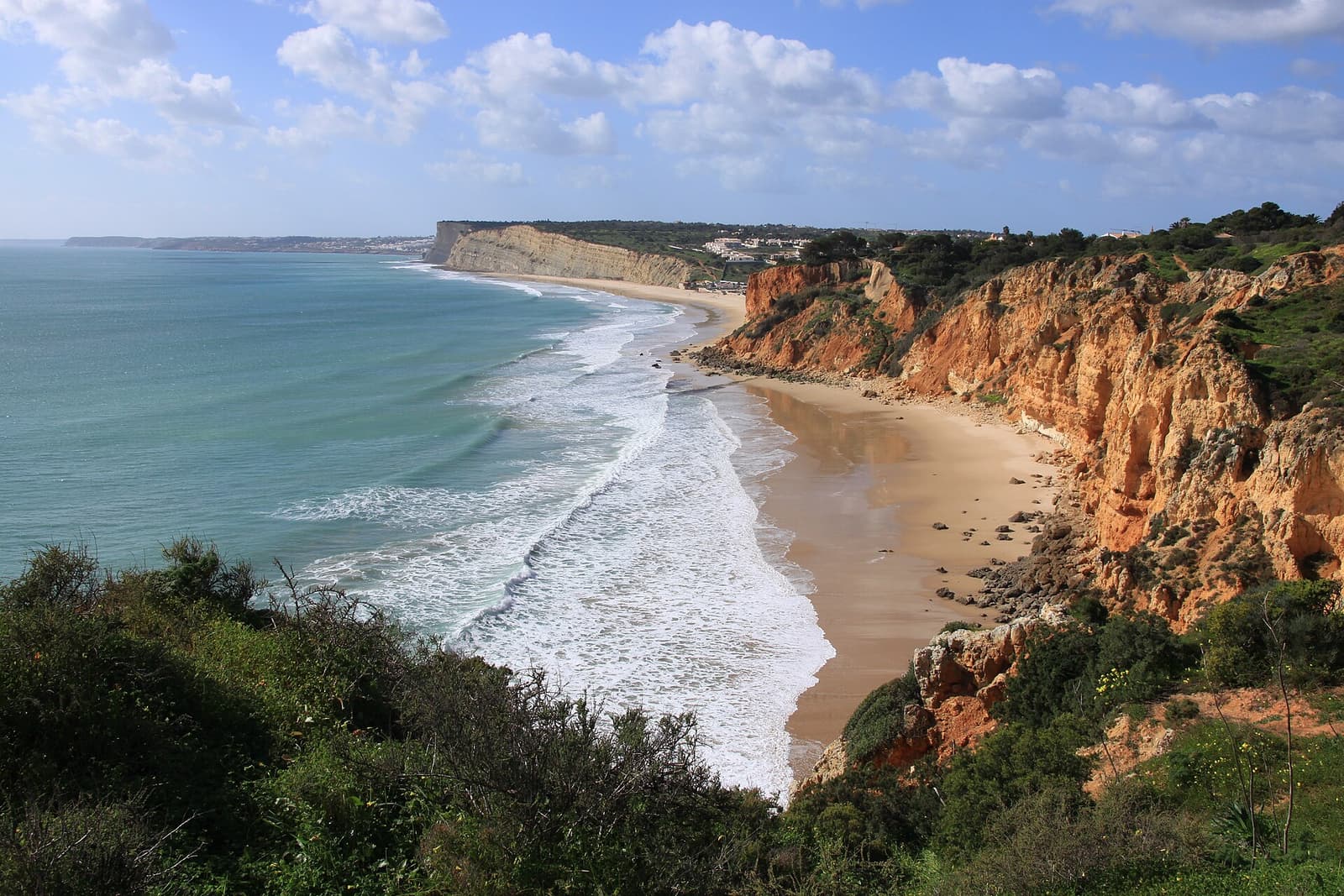
Algarve
Practical know-how for Algarve: when to go, getting around, money, tipping and the small things that make a trip easier.
- Best time to go
- May–June and September for warm sea and fewer crowds; July–August is busiest.
- Currency
- Euro (€)
- Tipping
- Not expected. Rounding up or 5 to 10% in restaurants is common.
- Language
- Portuguese. English is widely spoken in cities and the Algarve.
- Plugs
- Type C/F (two round pins), 230V. UK visitors need an adapter.
- Emergency
- 112
Getting there and around
Airport: Faro (Algarve) (FAO). Faro is the main Algarve airport. Resorts in the west can be 1 to 1.5 hours away by road. Direct flights from London take about 2h 48m.
Getting around: A hire car makes it far easier; local trains link Lagos, Faro and Tavira.
Public transport: a single ticket is typically £1.4–£2.1. A day pass or a travel card is usually better value if you ride several times a day.
The Algarve is a region, not a single city. Places listed here are spread along roughly 150 km of coast, so distances between them are larger than in the city guides.
Money and tipping
Currency: Euro (€).
Tipping: Not expected. Rounding up or 5 to 10% in restaurants is common.
Take a debit or credit card with no foreign transaction fees if you can, carry a little cash for markets and small cafés, and when a machine offers to charge you in pounds, choose the local currency.
Typical daily spend: see the Algarve cost guide.
Language, culture and daily rhythm
Language: Portuguese. English is widely spoken in cities and the Algarve.
Rhythm of the day: Lunch is 12:30 to 2:30pm and dinner from about 7:30pm. Many restaurants close one day a week.
- Bread, olives and cheese brought to the table (the “couvert”) are charged if you eat them. Send them back if you don’t want them.
- The hills are steep and the cobbles slippery: wear shoes with grip.
- Trams and funiculars are busiest mid-morning, so ride early or walk.
Booking ahead and saving money
Free things to do: 17 of the 22 places in our Algarve guide are free. See them.
Book timed-entry sights, popular restaurants and weekend trains ahead. Flights and hotels are usually cheapest booked 6 to 12 weeks out for city breaks, and earlier for summer beach holidays.
Safety, health and watch-outs
Emergency number: 112.
- Atlantic beaches have strong currents: swim where there are lifeguards and heed the flags.
- Petty theft is common on popular trams and in crowded viewpoints.
A UK GHIC gives you access to state healthcare in the EU on the same terms as locals, but it is not a substitute for travel insurance. Take out insurance that covers medical care, cancellation and your activities.
Practical details
Plugs and voltage: Type C/F (two round pins), 230V. UK visitors need an adapter.
Tap water: Tap water is safe to drink.
Entry and documents: Entry rules, passport validity and any pre-travel registrations change. Always check the GOV.UK foreign travel advice page for your destination before you book and again before you travel.
General guidance for Portugal, written for UK travellers. Rules, prices and opening hours change: check official sources (GOV.UK foreign travel advice, venue websites) before you travel.